Powerful Digital Media Marketing Tips to Boost Your Brand
Digital Media Marketing: A Practical Guide for Businesses Ready to Grow Online
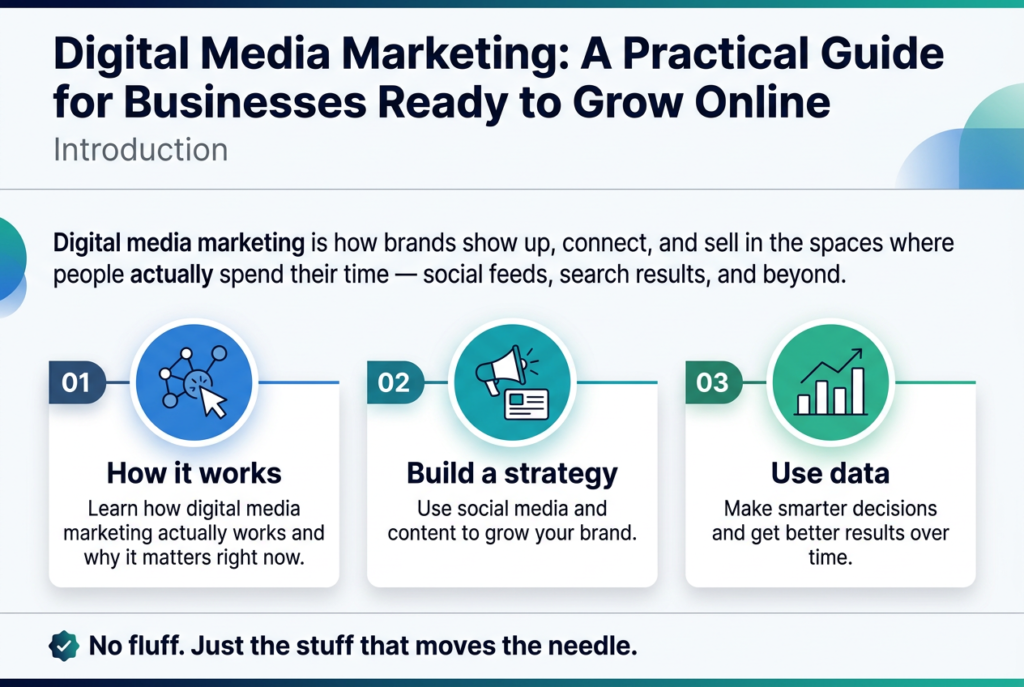
Digital media marketing is how brands show up, connect, and sell in the spaces where people actually spend their time — social feeds, search results, and beyond.
This guide is for small business owners, marketing managers, and entrepreneurs who want a clear roadmap without the jargon.
Here’s what we’ll walk through:
- How digital media marketing actually works and why it matters right now
- How to build a strategy that uses social media and content to grow your brand
- How to use data to make smarter decisions and get better results over time
No fluff. Just the stuff that moves the needle.
Understanding Digital Media Marketing
What Digital Media Marketing Actually Is
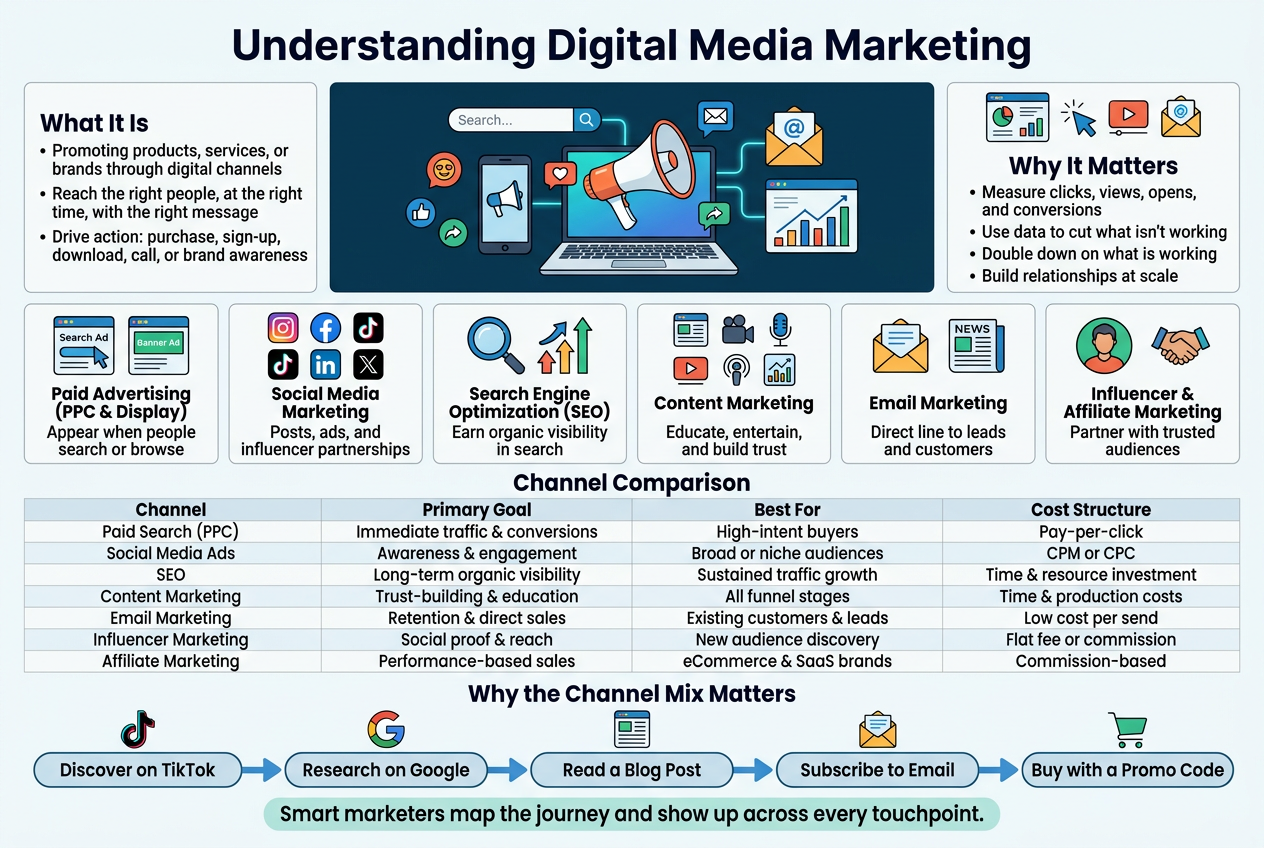
Digital media marketing is the practice of promoting products, services, or brands through digital channels — basically anywhere people spend time online or on their devices. The core purpose is straightforward: reach the right people, at the right time, with the right message, and turn that attention into action. That action could be a purchase, a sign-up, a download, a phone call, or simply building enough brand awareness that when someone is ready to buy, your name is the first one that comes to mind.
What separates digital media marketing from traditional marketing is the ability to measure almost everything. You’re not guessing how many people saw a billboard on the highway. You know exactly how many people clicked your ad, watched your video for more than 10 seconds, or opened your email on a Tuesday afternoon. That level of data gives marketers the power to make smarter decisions, cut what isn’t working, and double down on what is.
At its heart, digital media marketing is about building relationships at scale. A small business in Austin can now reach customers in Amsterdam. A startup with a modest budget can compete with a well-established brand, simply by being more creative, more targeted, and more consistent with their digital presence.
Key Channels Driving Modern Digital Campaigns
Not all digital channels work the same way, and the best marketers know when to use each one based on their goals, audience, and budget. Here’s a breakdown of the main channels shaping campaigns today:
Paid Advertising (PPC & Display)
Pay-per-click advertising through platforms like Google Ads and Microsoft Ads lets brands show up at the exact moment someone is searching for something relevant. Display ads work more like digital billboards — they follow users across websites and apps to keep a brand top of mind.
Social Media Marketing
Platforms like Instagram, Facebook, TikTok, LinkedIn, and X (formerly Twitter) give brands a direct line to their audience. Whether it’s organic posts, paid social ads, or influencer partnerships, social media is where brand personality comes alive.
Search Engine Optimization (SEO)
SEO is the long game. It’s about making sure your website shows up in Google search results without paying for each click. Good SEO means better visibility, more organic traffic, and lasting credibility.
Content Marketing
Blog posts, videos, podcasts, infographics, and guides — content marketing educates and entertains an audience while quietly building trust. It feeds SEO, supports social media, and gives paid campaigns something worth promoting.
Email Marketing
Email might feel old-school, but it consistently delivers one of the highest returns on investment of any digital channel. A well-segmented email list is a direct line to people who already want to hear from you.
Influencer & Affiliate Marketing
Brands partner with creators or affiliates who already have a loyal, engaged audience. It’s word-of-mouth marketing with a digital backbone — and done right, it drives serious results.
A Quick Look at How These Channels Compare
| Channel | Primary Goal | Best For | Cost Structure |
|---|---|---|---|
| Paid Search (PPC) | Immediate traffic & conversions | High-intent buyers | Pay-per-click |
| Social Media Ads | Awareness & engagement | Broad or niche audiences | CPM or CPC |
| SEO | Long-term organic visibility | Sustained traffic growth | Time & resource investment |
| Content Marketing | Trust-building & education | All funnel stages | Time & production costs |
| Email Marketing | Retention & direct sales | Existing customers & leads | Low cost per send |
| Influencer Marketing | Social proof & reach | New audience discovery | Flat fee or commission |
| Affiliate Marketing | Performance-based sales | eCommerce & SaaS brands | Commission-based |
Why the Channel Mix Matters
No single channel is a silver bullet. The brands that consistently win in digital media marketing are those that understand how each channel plays a different role in the customer journey. Someone might discover a brand through a TikTok video, research it through a Google search, read a blog post, subscribe to an email list, and finally make a purchase after receiving a promo code in their inbox.
That full journey touches multiple channels, and each one influenced the final decision. Smart digital marketers map that journey, identify where their audience spends time at each stage, and build campaigns that show up consistently across those touchpoints.
Leveraging Social Media for Brand Growth
Create Compelling Content That Drives Engagement
Social media is a noisy place. Millions of posts go live every single minute, and your brand is competing for a split second of someone’s attention as they scroll through their feed. The brands that win are the ones that stop the scroll — and the way you do that is by creating content that actually connects with people.
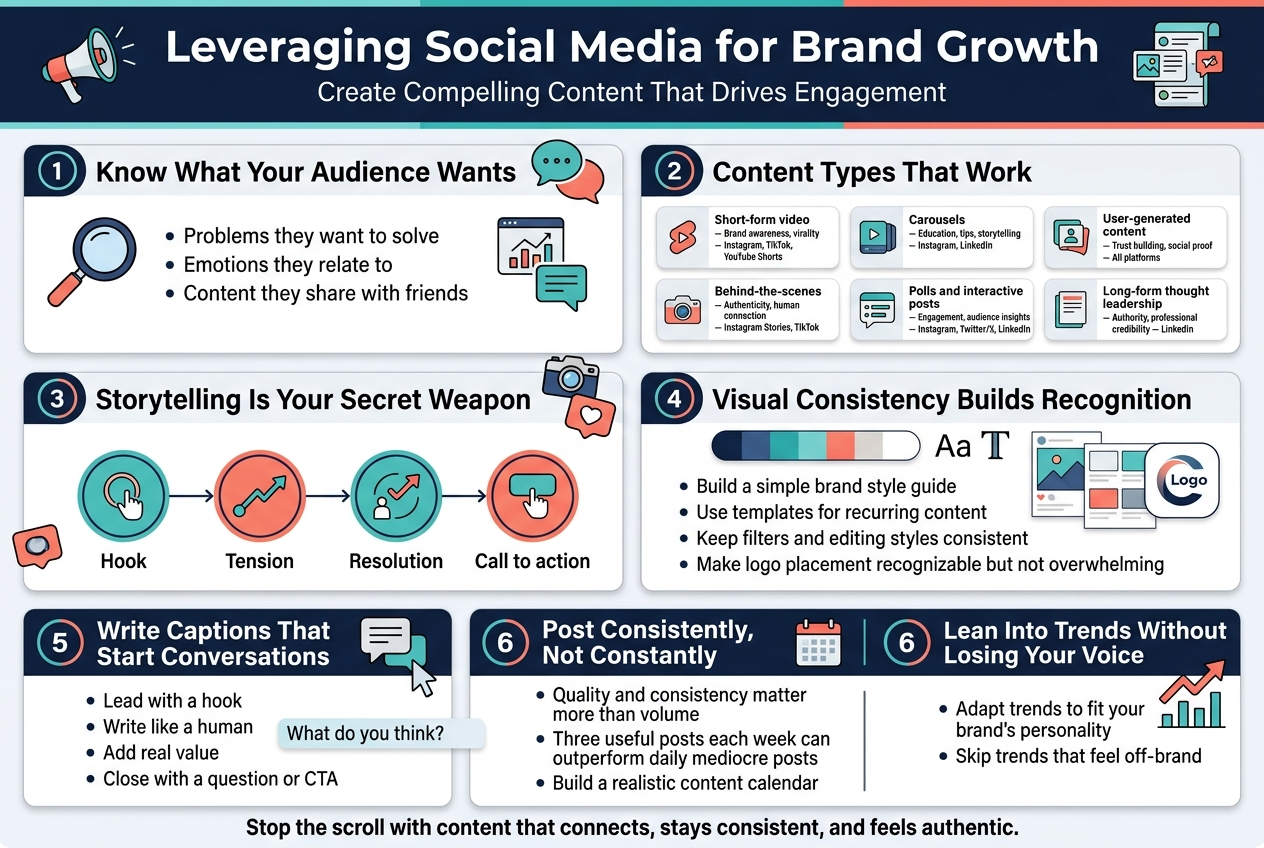
Know What Your Audience Actually Wants to See
Before you write a single caption or design a single graphic, you need to get inside your audience’s head. Ask yourself:
- What problems are they trying to solve?
- What makes them laugh, cry, or feel seen?
- What kind of content do they share with their friends?
The biggest mistake brands make is creating content they want to post rather than content their audience wants to consume. Spend time reading comments, checking your analytics, and even reaching out to your followers directly. That raw, honest feedback is worth more than any marketing playbook.
The Types of Content That Actually Work
Not all content performs equally. Here’s a quick breakdown of formats and what they tend to achieve on social media:
| Content Type | Best For | Platform Fit |
|---|---|---|
| Short-form video (Reels, TikTok) | Brand awareness, virality | Instagram, TikTok, YouTube Shorts |
| Carousels | Education, tips, storytelling | Instagram, LinkedIn |
| User-generated content (UGC) | Trust building, social proof | All platforms |
| Behind-the-scenes content | Authenticity, human connection | Instagram Stories, TikTok |
| Polls and interactive posts | Engagement, audience insights | Instagram, Twitter/X, LinkedIn |
| Long-form thought leadership | Authority, professional credibility |
The trick isn’t to use every format — it’s to find the two or three that resonate most with your specific audience and double down on them.
Storytelling Is Your Secret Weapon
People don’t connect with products. They connect with stories. Instead of posting “Our new product is now available,” try sharing why you built it. Talk about the problem you spotted, the sleepless nights behind the scenes, the customer who inspired the idea. That kind of content makes people feel like they’re part of something, not just being sold to.
Strong storytelling on social media usually follows a simple pattern:
- Hook — Grab attention in the first line or first second of video
- Tension — Present a relatable problem or challenge
- Resolution — Offer your brand as a natural, helpful answer
- Call to action — Tell people exactly what to do next
Visual Consistency Builds Recognition
Your visuals are doing a lot of heavy lifting even before someone reads a word of your copy. When your feed looks cohesive — consistent colors, fonts, and overall aesthetic — people start to recognize your content before they even see your username. That kind of brand recall is incredibly powerful over time.
A few practical ways to nail visual consistency:
- Build a simple brand style guide with your core colors and fonts
- Use templates for recurring content types like tips, quotes, or product posts
- Keep filters and editing styles consistent across photos and videos
- Make sure your logo placement is recognizable but not overwhelming
Write Captions That Start Conversations
A beautiful visual gets the click. A good caption keeps them reading and, better yet, gets them talking. Here’s what separates a caption that just sits there from one that sparks real engagement:
- Lead with a hook — Your first line needs to earn the “more” click. Ask a bold question, drop a surprising stat, or start with a strong opinion.
- Write like a human — Ditch the corporate speak. Write the way you’d talk to a friend.
- Add real value — Whether it’s a laugh, a tip, or a new perspective, give people a reason to stop and read.
- Close with a question or CTA — “What do you think?” or “Drop your answer below” can dramatically increase comment activity.
Post Consistently, Not Constantly
There’s a myth that you need to post three times a day to stay relevant. The truth is, quality and consistency matter a lot more than volume. A brand that posts three genuinely useful, well-crafted pieces of content each week will outperform one that floods feeds with mediocre posts daily.
Build a content calendar that’s realistic for your team. It’s better to show up reliably with great content than to burn out trying to keep up with an unsustainable posting schedule. Social media algorithms also tend to reward consistency over time — staying active signals to platforms that you’re a trustworthy, engaged account worth showing to more people.
Lean Into Trends Without Losing Your Voice
Jumping on trending audio, memes, or challenges can give your content a massive reach boost. But the key is adapting trends to fit your brand’s personality rather than copying them outright. The brands that do this well take a trending format and inject their own unique angle into it — so it still feels fresh and authentic rather than forced.
A good rule of thumb: if a trend feels totally off-brand or makes you cringe, skip it. Your audience followed you for your voice, and chasing every trend at the expense of consistency can confuse people about who you actually are.
Maximizing Results with Search and Content Marketing
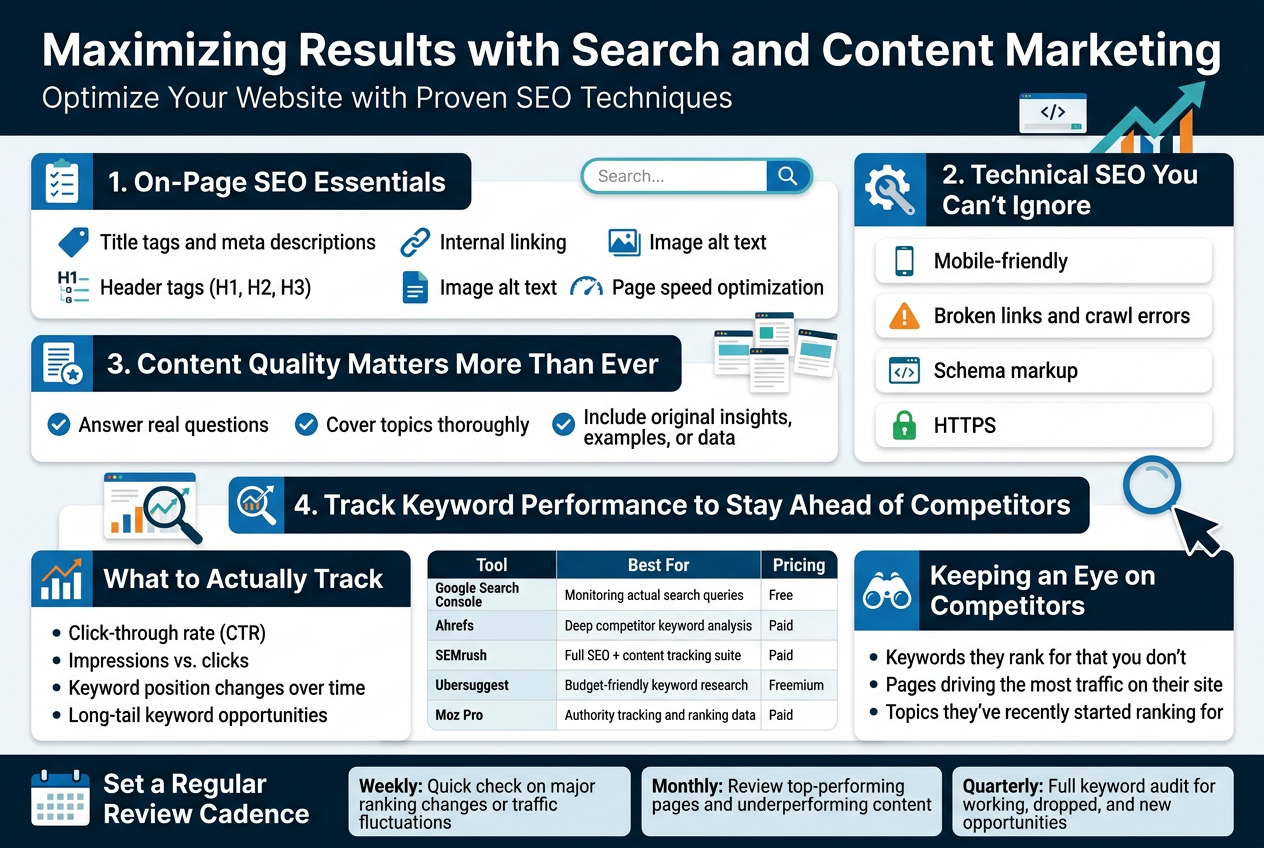
Optimize Your Website with Proven SEO Techniques
Getting your website to rank well on search engines isn’t magic — it’s a mix of smart strategy, consistency, and knowing what Google actually wants. Here’s what works right now:
On-Page SEO Essentials
Every page on your site should be built around a clear purpose. That means:
- Title tags and meta descriptions that are compelling and include your target keyword naturally
- Header tags (H1, H2, H3) that organize your content and signal relevance to search engines
- Internal linking to guide visitors deeper into your site and spread link equity across pages
- Image alt text that describes visuals accurately — this helps both accessibility and search indexing
- Page speed optimization — slow pages kill rankings and drive visitors away fast
Technical SEO You Can’t Ignore
Behind the scenes, your website needs to be healthy for search engines to trust it:
- Make sure your site is mobile-friendly — Google uses mobile-first indexing, so a broken mobile experience tanks your rankings
- Fix broken links and crawl errors using tools like Google Search Console
- Use schema markup to help search engines understand your content structure, which can earn you rich snippets in search results
- Ensure your site runs on HTTPS — it’s a ranking signal and builds trust with visitors
Content Quality Matters More Than Ever
Search engines have gotten very good at recognizing genuinely helpful content. Thin, keyword-stuffed pages no longer cut it. Your content should:
- Answer real questions your audience is actually searching for
- Cover topics thoroughly without unnecessary fluff
- Include original insights, examples, or data that competitors haven’t already said a hundred times
Track Keyword Performance to Stay Ahead of Competitors
Knowing which keywords bring traffic is one thing. Knowing why certain keywords perform better than others — and acting on that — is where the real competitive edge lives.
Tools Worth Using
| Tool | Best For | Pricing |
|---|---|---|
| Google Search Console | Monitoring actual search queries | Free |
| Ahrefs | Deep competitor keyword analysis | Paid |
| SEMrush | Full SEO + content tracking suite | Paid |
| Ubersuggest | Budget-friendly keyword research | Freemium |
| Moz Pro | Authority tracking and ranking data | Paid |
Each of these gives you a slightly different angle, and many serious marketers combine two or three of them to get the full picture.
What to Actually Track
Don’t just stare at rankings. Pay attention to:
- Click-through rate (CTR) — a high-ranking page with a low CTR often needs a better title tag or meta description
- Impressions vs. clicks — if you’re showing up in search but nobody’s clicking, your snippets aren’t compelling enough
- Keyword position changes over time — sudden drops can signal a Google algorithm update, a competitor gained new backlinks, or your content went stale
- Long-tail keyword opportunities — these lower-competition phrases often convert better because searchers using them know exactly what they want
Keeping an Eye on Competitors
Competitor keyword tracking isn’t about copying what they do — it’s about spotting gaps. Run a competitor’s domain through a tool like Ahrefs or SEMrush and look for:
- Keywords they rank for that you don’t
- Pages driving the most traffic on their site
- Topics they’ve recently started ranking for
When you spot a gap, create content that covers that topic better, more thoroughly, and with a fresher angle. Pair that with solid on-page SEO, and you’ve got a real shot at pulling that traffic your way.
Set a Regular Review Cadence
Keyword performance isn’t a set-it-and-forget-it thing. Build a habit of checking your data:
- Weekly: Quick check on any major ranking changes or traffic fluctuations
- Monthly: Review top-performing pages, identify underperforming content that needs updating
- Quarterly: Full keyword audit — what’s working, what’s dropped, what new opportunities exist
Staying consistent with these reviews means you catch problems early and double down on what’s already working before a competitor notices the same opportunity.
Emerging Trends Shaping the Future of Digital Marketing
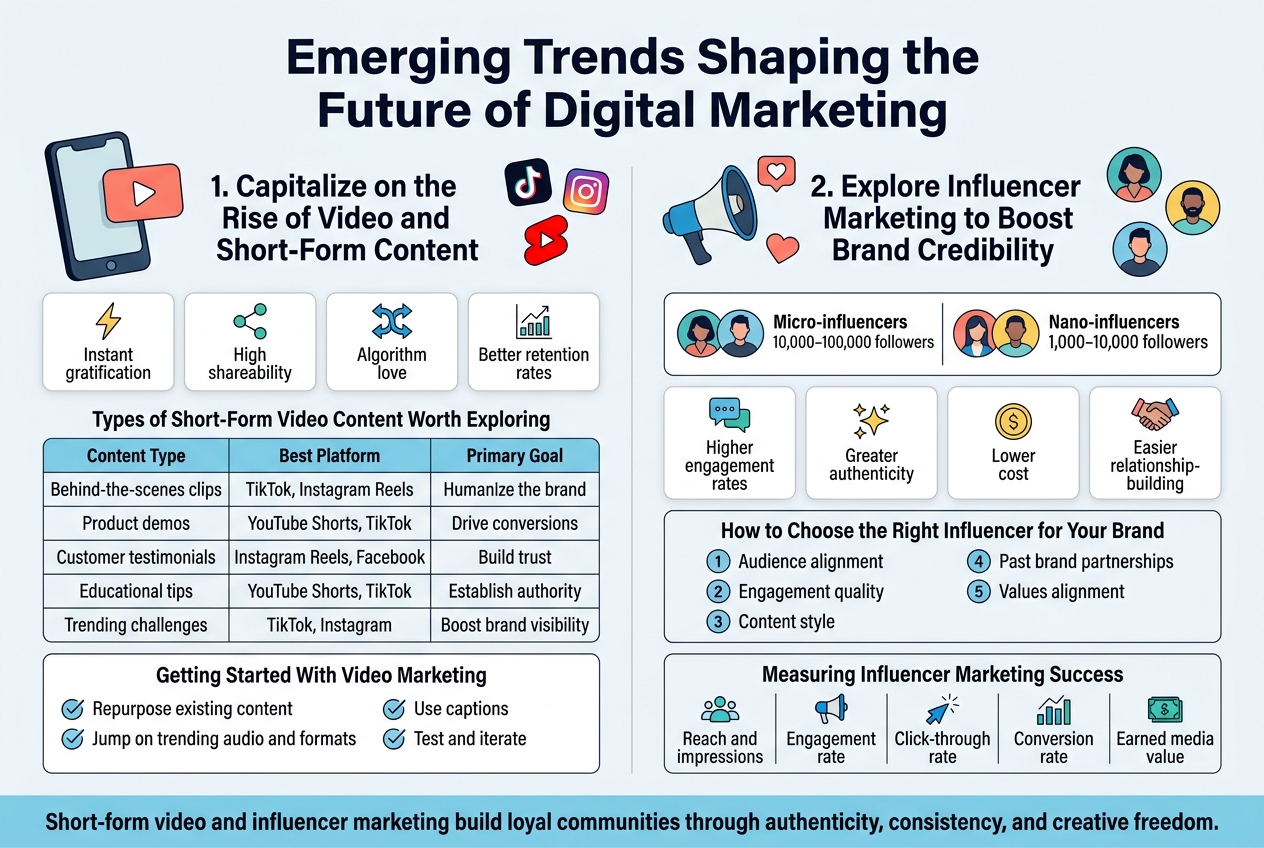
Capitalize on the Rise of Video and Short-Form Content
Video content has completely taken over how people consume information online, and the numbers back this up. Platforms like TikTok, Instagram Reels, and YouTube Shorts have reshaped audience expectations — people now want fast, engaging, and visually compelling content delivered in under 60 seconds.
Why Short-Form Video Works So Well
Short-form videos tap into the way modern audiences actually scroll. Attention spans are shorter, competition for eyeballs is fierce, and a punchy 30-second clip often outperforms a 2,000-word blog post in terms of reach and engagement. Here’s what makes this format so powerful:
- Instant gratification — Viewers get the message fast without committing too much time.
- High shareability — A relatable or entertaining clip spreads organically, often going viral with zero paid spend.
- Algorithm love — Platforms actively push short-form video to new audiences, giving brands massive organic reach opportunities.
- Better retention rates — Viewers are more likely to watch a 30-second clip all the way through compared to a longer format.
Types of Short-Form Video Content Worth Exploring
| Content Type | Best Platform | Primary Goal |
|---|---|---|
| Behind-the-scenes clips | TikTok, Instagram Reels | Humanize the brand |
| Product demos | YouTube Shorts, TikTok | Drive conversions |
| Customer testimonials | Instagram Reels, Facebook | Build trust |
| Educational tips | YouTube Shorts, TikTok | Establish authority |
| Trending challenges | TikTok, Instagram | Boost brand visibility |
Getting Started With Video Marketing
You don’t need a Hollywood production budget to make video work for your brand. A smartphone with decent lighting and a clear message can get you further than you’d expect. The key is consistency. Posting regularly signals to algorithms — and your audience — that you’re active and worth following.
Some practical ways to get going:
- Repurpose existing content — Turn blog posts into quick video summaries or tip lists.
- Jump on trending audio and formats — Platforms reward brands that engage with trending content early.
- Use captions — A huge portion of people watch videos on mute, so text overlays keep them engaged.
- Test and iterate — Not every video will land. Pay attention to your analytics, double down on what works, and quietly retire what doesn’t.
Long-form video still has its place — think webinars, product walkthroughs, and YouTube tutorials — but right now, short-form is where the energy is. Brands that adapt quickly will build loyal communities while others are still figuring out their content calendar.
Explore Influencer Marketing to Boost Brand Credibility
Influencer marketing has grown from a niche tactic into a core pillar of modern brand strategy. The reason is straightforward — people trust people, not ads. When someone they already follow and respect talks about a product, it carries far more weight than a banner ad or a promoted post from the brand itself.
The Shift Toward Micro and Nano Influencers
The biggest shift in influencer marketing right now is the move away from mega-celebrities toward micro-influencers (10,000–100,000 followers) and nano-influencers (1,000–10,000 followers). Here’s why this shift makes so much sense for brands:
- Higher engagement rates — Smaller audiences tend to be more tightly knit, which means more comments, shares, and genuine conversations.
- Greater authenticity — Micro-influencers usually have a very specific niche, so their followers trust their recommendations deeply.
- Lower cost — Partnering with five micro-influencers often costs less than one mega-influencer deal and delivers better overall results.
- Easier relationship-building — Smaller influencers are often more accessible and willing to build long-term partnerships with brands they genuinely like.
How to Choose the Right Influencer for Your Brand
Picking the wrong influencer is a quick way to waste budget and damage credibility. Before signing any deal, run through these checkpoints:
- Audience alignment — Does their follower base match your target customer? Age, location, interests, and buying behavior all matter.
- Engagement quality — Look beyond follower counts. Are the comments genuine conversations or generic emoji reactions that suggest fake engagement?
- Content style — Does their aesthetic and tone match your brand personality? A mismatch feels awkward to audiences immediately.
- Past brand partnerships — Have they promoted too many competing products? Over-promotion kills trust fast.
- Values alignment — This one is non-negotiable. An influencer controversy can attach itself to your brand if your values don’t align.
Types of Influencer Partnerships to Consider
| Partnership Type | What It Looks Like | Best For |
|---|---|---|
| Sponsored posts | Paid content featuring your product | Awareness campaigns |
| Affiliate marketing | Commission-based promotion | Performance-driven goals |
| Brand ambassadorships | Long-term exclusive partnerships | Deep brand loyalty building |
| Product gifting | Sending free products for organic coverage | Low-budget awareness |
| Co-created content | Influencer helps design a product or campaign | Engagement and PR buzz |
Measuring Influencer Marketing Success
Throwing money at influencers without tracking results is a mistake brands make way too often. Before launching any campaign, define what success actually looks like. Common metrics to track include:
- Reach and impressions — How many people saw the content?
- Engagement rate — Likes, comments, shares, and saves relative to follower count.
- Click-through rate — Are people actually visiting your website or landing page?
- Conversion rate — How many people took the action you wanted — purchased, signed up, or downloaded?
- Earned media value — What would this same exposure have cost you in paid advertising?
Influencer marketing works best when it feels like a natural recommendation rather than a transaction. The most successful campaigns happen when brands give influencers creative freedom to present the product in their own voice rather than scripting every word. Audiences can spot forced promotions a mile away, and when they do, both the influencer and the brand take a credibility hit.
Building genuine influencer relationships over time — rather than chasing one-off posts — is where the real long-term value lives.
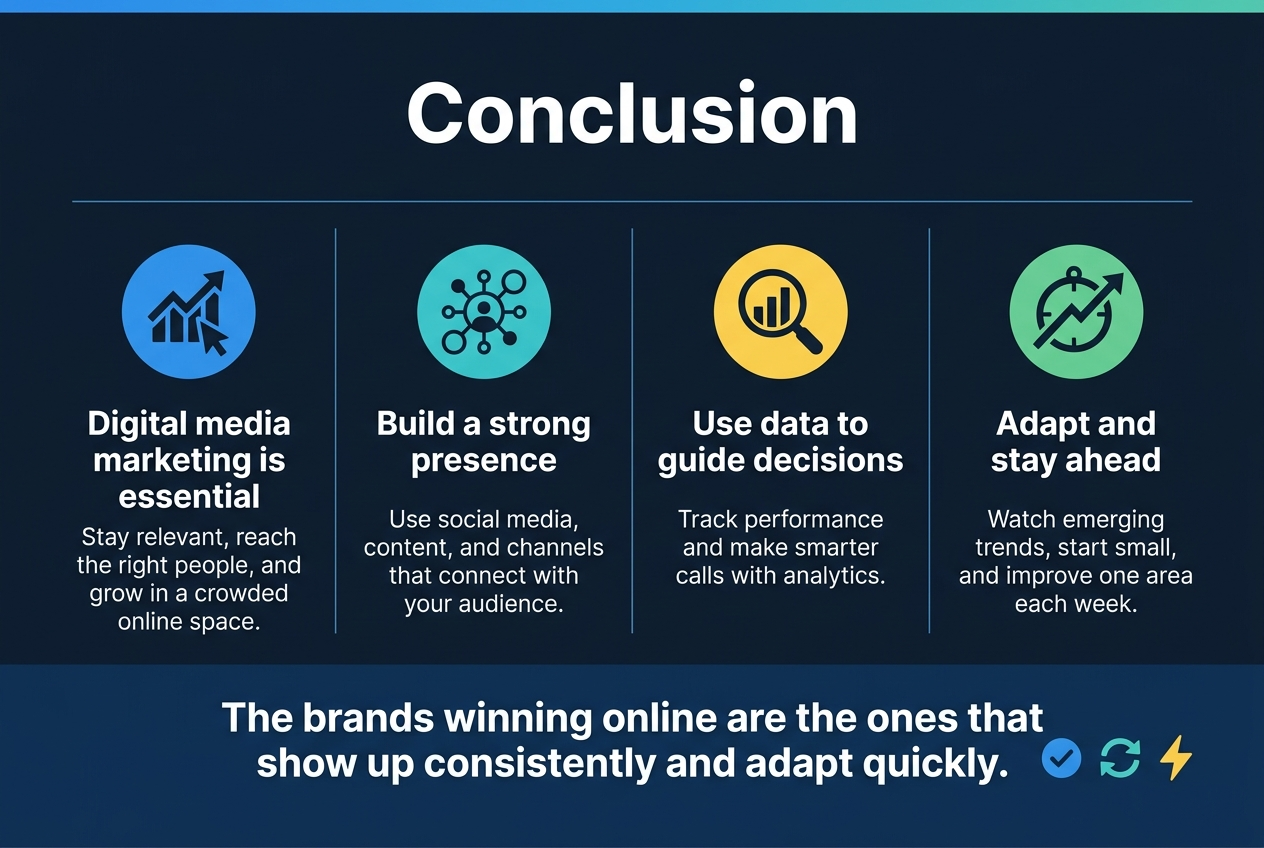
Digital media marketing is no longer optional — it’s how brands stay relevant, reach the right people, and grow in a crowded online space. From building a solid strategy and showing up strong on social media, to creating content that ranks and using data to make smarter calls, every piece works together to move your brand forward. The tools and channels available today make it easier than ever to connect with your audience in meaningful ways.
The digital landscape keeps shifting, and staying ahead means keeping an eye on emerging trends while staying grounded in what actually works for your audience. Start small if you need to, but start now. Pick one area to improve this week — whether that’s your content, your analytics, or your social presence — and build from there. The brands winning online aren’t necessarily the biggest ones; they’re the ones that show up consistently and adapt quickly.